
TEMPO.CO, Jakarta - The European Commission on Thursday announced a call for tenders designed to generate over €30 billion ($34 billion) in state and private funding for the construction of seven so-called AI gigafactories to boost the European Union's computing independence.
Of the funds, €10 billion will come from the EU and member states while private investors put up the remaining €20 billion.
The funds are to be collected and distributed by the European High Performance Computing Joint Undertaking (EuroHPC JU), which was launched in 2020 to develop "a world class supercomputing ecosystem by pooling the resources of the European Union, European countries and private partners."
Consortia and special purpose vehicles (SPVs) made up of technology and cloud service providers, public entities and investors are all eligible to apply for funding.
Chipmakers AMD, Nvidia and Qualcomm have all signed letters of intent to provide chips to groups involved in the projects, according to the Commission.
The Commission said the scheme will "expand Europe's AI computing capacity and give start-ups, scale-ups, small and medium-sized enterprises, industry, academia and public authorities access to infrastructure."
Speaking of the construction of the facilities — which will produce advanced AI processors, software and cloud technology stacks, high-speed connectivity and energy-efficient data centers — Henna Virkkunen, the European Commission's executive vice-president for Tech Sovereignty, Security and Democracy, called the moment "a milestone."
"Access to the raw scale of computing power within AI gigafactories is a strategic necessity for Europe as AI development accelerates," she said in a statement.
EU beholden to US and China when it comes to tech
Currently, the EU operates 19 data centers located between Spain and Finland.
The bloc remains heavily reliant upon foreign actors for its tech, however, something that makes it and its member states extremely vulnerable to the whims of outside forces.
US President Donald Trump, for instance, has made clear his intention to leverage American economic heft to influence how the bloc and its members regulate US tech.
For its part, China has limited the supply of minerals critical to the sector.
The EU now hopes to triple data center capacity within five to seven years in order to gain independence but sees challenges when competing with the US and China, where, among other things, energy is far cheaper.
A recent report issued by the European Commission and presented to the EU Parliament was bleak in its outlook should the situation remain as it is, warning, "European businesses and public authorities will continue to rely on US AI providers to the detriment of European service providers struggling to work at the frontier."
"Dependence on hyperscale cloud and AI computing service providers, particularly for highly critical use cases," the report said, "will continue to expose data to third-country access and carry risks to service continuity, endangering operational autonomy."
EU selling tech, are citizens willing to buy?
EU leaders have sounded the alarm over the bloc's lagging efforts on the AI front, yet some citizens are leery of the tech for a host of social, economic and environmental reasons.
The Commission has sought to allay fears with pledges that the new technology will be developed and operated according to "EU standards on data protection, safety, security and ethics," in reference to the bloc's Digital Services Act and Digital Market Act.
Beyond fears of massive job losses caused by AI, the construction of massive tech facilities has faced global backlash over environmental concerns due to their voracious appetite for water and electricity as well as the inordinate amount of noise pollution they produce.
The European Commission says it will accept bids for its new projects until November 12, and begin distributing funds in early 2027 so that construction can begin within the year.
Read: Meta Boss Sees Billions Using Personal AI Agents by 2031
Click here to get the latest news updates from Tempo on Google News
Weighing the Costs and Benefits of Siberian Oil
5 hari lalu

Oil imports from Russia proceed even as advanced economies extend sanctions against Moscow. Further processing mechanisms are needed.
Trump Threatens EU with Tariff Probe Over Google, Tech Fines
6 hari lalu
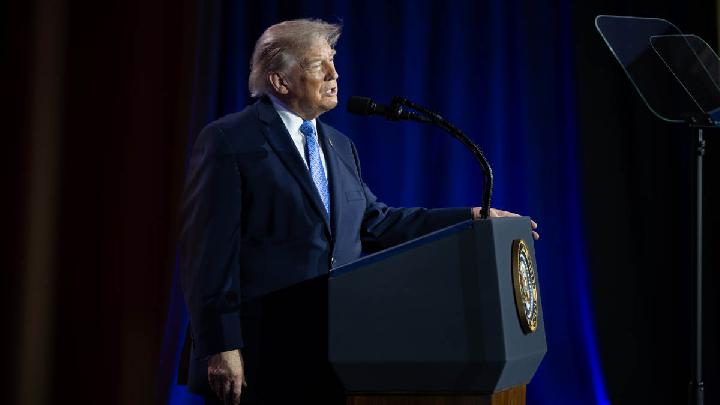
Trump to launch EU tariff probe over fines on US tech firms, citing Google's latest loss and other cases against American companies.
EU Fines Google 890 Million Euros over Competition Rules
7 hari lalu
The European Commission said it found that Google had preferenced its search engine and app store in ways that unfairly harmed competition.
French Lawmakers Vote on Social Media Ban for Children
9 hari lalu

France could become the first EU country to ban social media for children if lawmakers approve the measure before schools reopen in September.
AliExpress Hit with Record EU Fine
10 hari lalu

AliExpress has become the latest major online marketplace to face penalties under the EU's Digital Services Act.
EU Ban on Destroying Unsold Clothes Takes Effect
11 hari lalu

A ban on the disposal of unsold clothes and shoes took effect across the European Union on Sunday, in the bloc's latest move to cut waste.
Germany Proposes EU Peacekeeping Mission to Replace UNIFIL in Lebanon
13 hari lalu

Germany proposed an EU peacekeeping mission in Lebanon to replace UNIFIL after the UN force's mandate expires, its foreign minister said.
Gaza Strip: EU Conference Pledges 900m Euros in Donations
17 hari lalu

Gaza Strip will receive some 900 million Euros ($1 billion) in donations from Europe, after an EU-backed conference raised funds for reconstruction.
EU Experts Urge Social Media Restrictions for Kids Under 13
17 hari lalu

An expert panel has recommended limiting access to social media for young children across the EU.
Ukraine Joins 9 European Nations to Build Ballistic Missile Defense Shield
17 hari lalu

Ukraine and nine European countries have agreed to establish a joint ballistic missile defense coalition aimed at strengthening Europe's protection.