TEMPO.CO, Jakarta - For more than five decades, Tempo has built one of Indonesia’s largest journalistic archives. Since its first publication in 1971, thousands of investigative reports, news articles, photographs, videos, audio recordings, infographics, and supporting documents have been produced and preserved in various formats.
In the digital age, however, the challenge is no longer merely producing content. An equally important task is ensuring that this vast archive can be rediscovered, securely managed, and effectively utilized by both the newsroom and readers whose information habits continue to evolve.
To address these challenges, Tempo is developing two major technology initiatives: Digital Asset Management (DAM) and Tempo Assistant, an AI-powered chatbot designed to provide new ways of accessing Tempo’s journalistic archive.
For Tempo, these projects are not simply about adopting new technology. They are part of a broader effort to ensure that the journalistic legacy accumulated over decades remains relevant amid changing patterns of information consumption.
These efforts have also brought Tempo to the international stage. After competing against hundreds of media organizations worldwide, Tempo was selected as one of media from 11 countries in the JournalismAI Innovation Challenge, a Google News Initiative-supported program that promotes innovation and experimentation in the use of artificial intelligence in the media industry.
Senior Product Manager and Project Lead, Gregorio Vincent Wijaya said the DAM need emerged from sheer volume of assets owned by Tempo and the need to consolidate them into a centralized system.
“Tempo urgently needs to consolidate all its assets dating back to 1971 onto a single platform as a single source of truth to improve the efficiency and effectiveness of editorial work,” Vincent said.
For years, editorial assets have been scattered across different systems, formats, and storage media. Some originated in the analog era and were later digitized, while others were created within an increasingly complex digital ecosystem.
Deputy Chief Technology Officer, Rianda Zulhamjani, explained that DAM was developed to ensure these assets are not merely stored as documentation but can also be easily found and reused. “Archive value can only be maximized if its management system is centralized, organized, and searchable by context,” he said.
Through DAM, photographs, articles, videos, audio files, infographics, investigative documents, manuscripts, and digitized print archives will be managed within a single system. Each asset will be enriched with metadata, making it easier to locate through more advanced search capabilities.
Chief Technology Officer, Heru Tjatur, said DAM was designed using a contextual search approach. Users can search not only through simple keywords but also through relationships between events, people, locations, and periods.
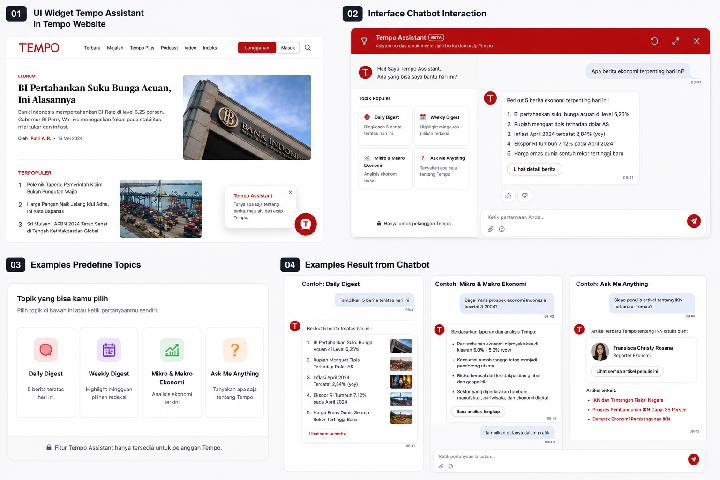 Tempo Assistant Illustration. Doc. TEMPO
A journalist, for example, can search not only for “Jokowi,” but also for photographs or documents related to his visits to conflict areas during a specific year without manually reviewing archives. Artificial intelligence supports DAM through metadata enrichment, entity recognition, visual analysis, audio and video transcription. Editorial decisions, however, remain entirely in human hands.
“AI is used to assist with asset search and management, not to make journalistic decisions,” Heru said.
Development of DAM began in 2025 and entered technical phase in early 2026. Implementation is now being rolled out gradually across Tempo’s operations, focusing on migrating priority assets and improving metadata quality.
Tempo expects DAM to reduce repetitive tasks that have long consumed newsroom resources, from searching archival photos to locating references from previous coverage. By shortening these processes, journalists can devote more time to work that creates greater editorial value.
At the same time, Tempo is witnessing significant changes in reader behavior. Where readers once consumed information article by article, many now expect answers that are immediate, interactive, and tailored to their needs. This shift in consumption patterns became the driving force behind the development of Tempo Assistant.
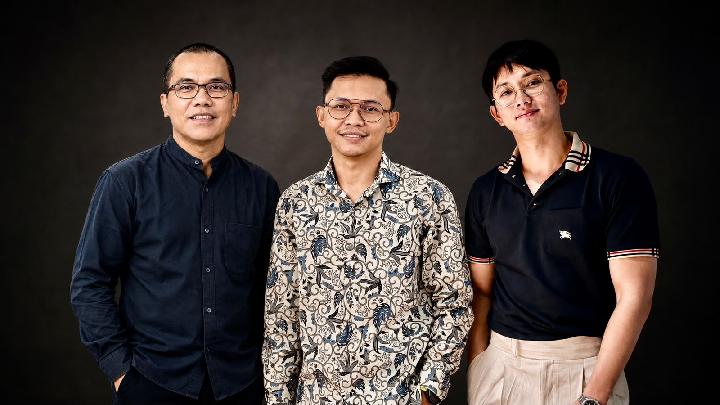 (Left to right) Tempo's Chief Technology Officer Heru Tjatur, Tempo's Deputy Chief Technology Officer Rianda Zulhamjani, and Senior Product Manager Gregorio Vincent Wijaya. Doc. TEMPO
According to Vincent, readers today want more than headlines. They want context, deeper understanding, and direct answers to specific questions. Tempo Assistant is designed as a new interface that allows readers to interact with Tempo’s archives and journalism in a more natural way. Through chatbot, readers can access daily news summaries, weekly highlights, economic and business digests, and ask questions about topics previously covered by Tempo.
For example, readers may ask about Bank Indonesia’s interest rate policy developments over the past year or explore Tempo’s reporting on a specific issue. Chatbot will then generate responses based on relevant articles and direct users to original sources.
To achieve this, Tempo uses large language model (LLM) technology. However, its use follows strict editorial safeguards. Rianda explained that Tempo employs a Retrieval-Augmented Generation (RAG) approach, in which an AI model generates answers only from articles and archives stored within Tempo’s database.
Under this system, the chatbot is not permitted to create facts or rely on assumptions. “Every factual answer must be traceable to its source,” Rianda said. As a result, every response includes links to articles on which it is based. If adequate sources cannot be found, chatbot will state that information is unavailable in Tempo’s archive rather than generate potentially misleading answers.
For Tempo, the success of these projects is not measured solely by technological sophistication. More important is how it strengthens journalism and creates new value for Tempo. Amid the pressures facing digital media and global technology platforms dominance, credible journalistic archives remain a unique asset that is difficult to replicate. DAM creates opportunities to reuse archival materials for editorial and business purposes, while Tempo Assistant offers readers a new way to engage with Tempo’s content.
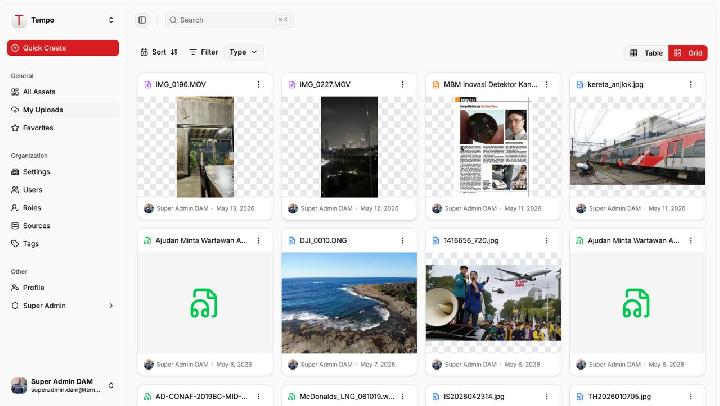 Tempo Digital Asset Management (DAM). Doc. TEMPO
In short term, Tempo aims to complete priority assets migration into DAM and launch a beta version of Tempo Assistant capable of answering reader questions using verified archival content. In the longer term, DAM is expected to evolve into foundation of knowledge graphs capable of connecting people, events, locations, documents, and issues across decades of reporting. Tempo Assistant, meanwhile, is envisioned as a gateway to more personalized and contextual access to journalistic knowledge.
Even after the project phase ends, development will continue. If proven stable and effective, Tempo sees opportunities to extend its digital archive management capabilities to other media organizations, educational institutions, and entities facing similar challenges.
Through DAM and Tempo Assistant, Tempo aims to demonstrate that artificial intelligence does not have to replace journalists. Instead, technology can serve as infrastructure that helps preserve, revitalize, and expand value of a journalistic legacy built over more than half a century. (*)
Read: Tempo's Reader Revenue Strategy Clinches Gold at Digital Media Awards 2026
Click here to get the latest news updates from Tempo on Google News