April 12, 2026 | 04:12 pm
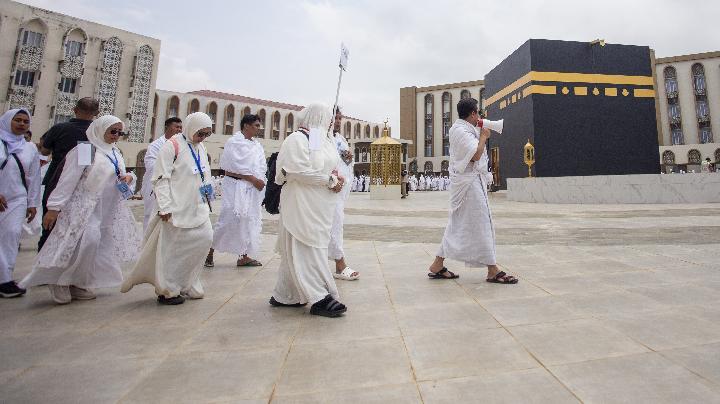
TEMPO.CO, Jakarta - The Association of Indonesian Muslim Hajj and Umrah Organizers (Amphuri) has criticized the proposed “ticket war” Hajj scheme, saying the concept must be thoroughly assessed to ensure it aligns with principles of justice, legal certainty, and public welfare in the organization of the pilgrimage.
Amphuri Secretary-General Zaky Zakaria Anshary said the group generally supports government efforts to improve Hajj services, but stressed that policy innovations must uphold fairness for all prospective pilgrims.
“This idea can be seen as a valid policy effort. However, it must adhere to the principles of justice, transparency, and the overall welfare of the community,” Zaky said in a statement on April 12.
The proposed “ticket war” scheme refers to a selection mechanism based on speed or competition. Under initial government explanations, pilgrims who meet the istitha’ah requirements, namely financial capability and good health, could secure Hajj slots without going through the long waiting list.
Suggested mechanisms include a “first come, first served” system or a competitive model resembling an auction. However, detailed implementation plans have yet to be disclosed.
Amphuri warned the scheme could create fairness issues. Millions of Indonesian pilgrims are already registered and have waited for decades under the current queue system, and any abrupt change risks undermining their moral rights.
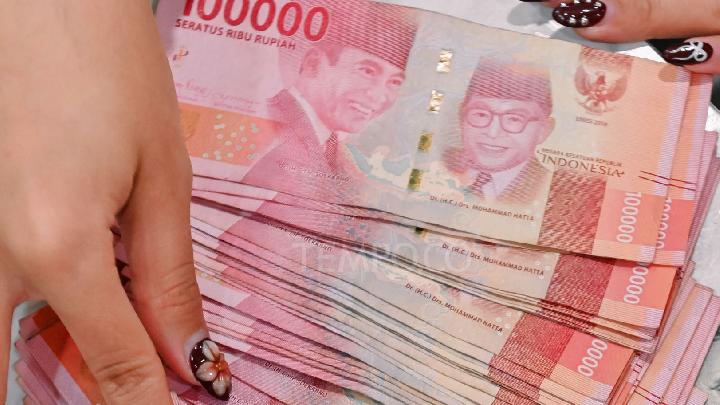
The organization also cautioned that a competitive model could widen inequality in access. Pilgrims from lower-income groups may be excluded due to limited financial capacity. Amphuri estimates that regular Hajj costs without subsidies could reach Rp90 million to Rp100 million or more.
Amphuri further highlighted potential implications for Hajj fund management overseen by the Hajj Financial Management Agency (BPKH). The current system relies on initial deposits from registrants, meaning any shift in the queue mechanism could directly affect how funds are managed.
“If the queue system is eliminated, the logic of initial deposits as the basis for fund management will also be lost,” Zaky said, noting that managed funds currently total around Rp170 trillion. “This is not only a technical issue but also concerns public trust.”
He added that long Hajj queues existed well before BPKH was established in 2017, with the deposit system dating back to the late 1990s as registrations surged.
Zaky said the root problem is structural—namely, the imbalance between limited quotas and growing demand. Indonesia’s Hajj quota follows a global ratio of one pilgrim per 1,000 Muslims, while population growth, rising awareness, and stronger purchasing power continue to lengthen waiting lists.
“The main issue lies in the imbalance between supply and demand,” he said.
As alternatives, Amphuri proposed several policy options. These include using unused annual quotas, estimated at 1,000 to 3,000 seats, as a limited pilot for the “ticket war” scheme, or applying the scheme only to additional quotas to avoid disrupting existing queues. The group noted that similar hybrid systems are used in countries such as Turkey, combining queue-based and lottery mechanisms.
Amphuri also suggested a dual system, in which regular Hajj would continue under a queue-based model grounded in social equity, while a non-queue scheme could be offered to wealthier pilgrims without subsidies and without affecting those already registered.
Zaky emphasized that any policy innovation must be data-driven and carefully implemented, including potential revisions to the Hajj and Umrah Law. “In the end, the Hajj pilgrimage is not just about quota management, but also about public trust and the responsibility of the state,” he said.
Meanwhile, Deputy Minister of Hajj and Umrah Dahnil Anzar Simanjuntak said the government is still studying the proposal, which is expected to run alongside the existing queue system.
“In the future, if Saudi Arabia opens its quota in large numbers, we will implement two schemes. The first is the existing queue scheme. The second scheme is what the Minister [Irfan Yusuf] referred to as the ‘ticket war’,” Dahnil said at a ministry meeting in Tangerang, Banten, as reported by Antara on April 10.
He added that the proposal is part of a broader effort to reform Hajj management, with the government aiming to reduce Indonesia’s average waiting time of 26.4 years.
Read: Hajj 'Ticket War' Plan Invites Scrutiny from Indonesian Lawmakers
Click here to get the latest news updates from Tempo on Google News
Greenpeace Indonesia Joins Global Sumud Flotilla to Break Gaza Blockade
4 jam lalu
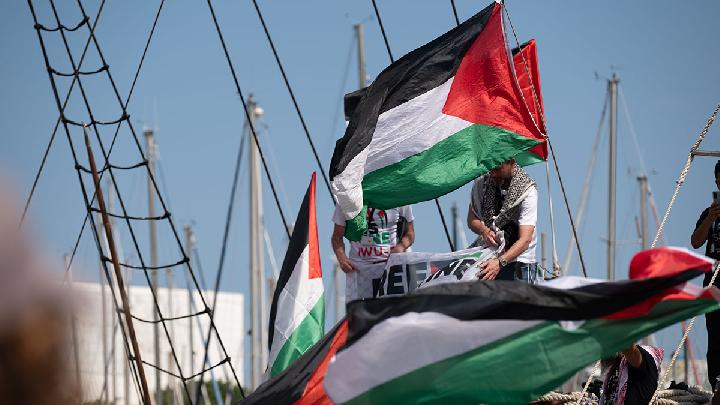
The Global Sumud Flotilla is scheduled to sail to Gaza today, April 12, 2026. The previous mission was intercepted by the Israeli military before reaching its destination
Indonesia Airport Traffic Rises 5% in First Quarter 2026
7 jam lalu
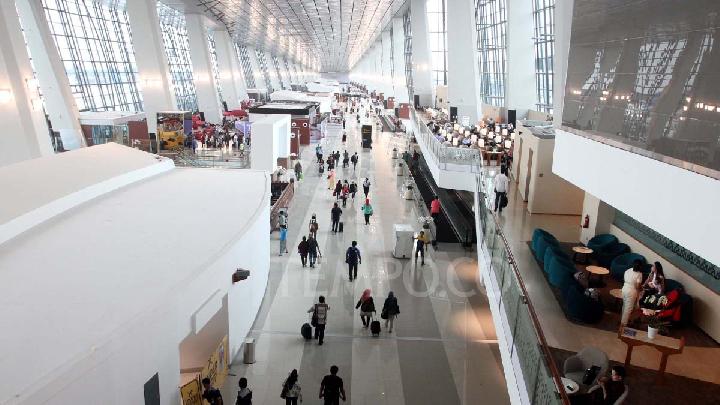
InJourney Airports recorded the total number of passenger movements in 37 airports in the first quarter of 2026 reaching 38.20 million, an increase of around 5 percent.
Indonesia Fails to Reach Finals at 2026 Badminton Asia Championships
7 jam lalu

Indonesian Duo Fajar/Fikri was defeated by South Korean pair Kang Min Hyuk/Ki Dong Ju in the semifinal of 2026 Badminton Asia Championships.
Indonesia Considers Vape Ban Over Health, Drug Risks
8 jam lalu

The proposal to ban vape or electronic cigarettes gains serious consideration due to various concerns, including its impact on the younger generation and potential health risks.
Indonesia Eyes Export of 1.5mn Tons Fertilizer as Iran War Disrupts Global Supply
19 jam lalu
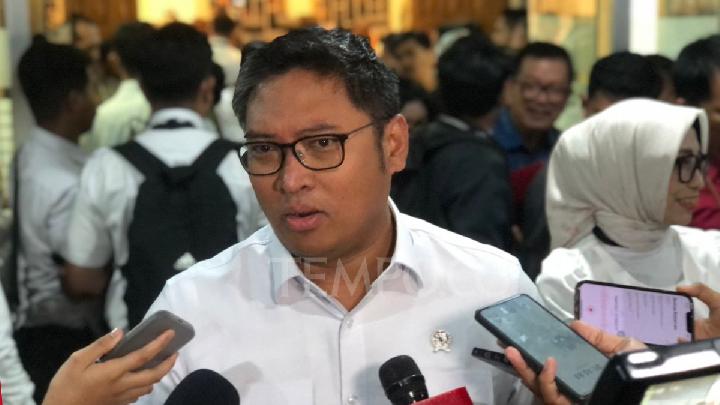
Indonesia says it is ready to export fertilizer, leveraging the disrupted global distribution following the war in the Middle East.
Early Wildfire Risk Rings Alarm as Extreme El Nino Looms Over Indonesia
21 jam lalu
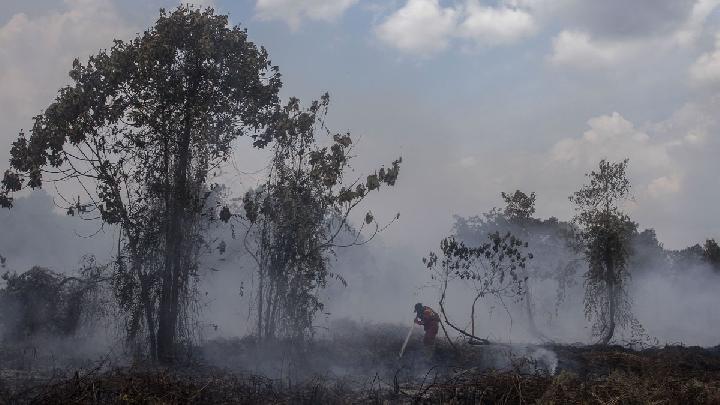
Godzilla El Nino has yet to arrive in Indonesia, but 23,000 wildfire hot spots have already emerged since the beginning of this year.
Hajj 'Ticket War' Plan Invites Scrutiny from Indonesian Lawmakers
23 jam lalu

The Ministry of Hajj and Umrah is considering implementing a "ticket war" mechanism to replace the Hajj waiting list system.
Indonesia and Russia Deepen Economic Ties via WGTII
1 hari lalu

Indonesia and Russia sign the 7th WGTII Protocol to strengthen trade, investment, and industrial cooperation across priority sectors.
Indonesia Won't Withdraw TNI Troops from UNIFIL, Teddy Says
1 hari lalu

According to Teddy, Indonesia remains committed to deploying TNI personnel for global peacekeeping efforts.
Today's Top 3 News: Prabowo Eyes Garuda Indonesia-Saudia Joint Venture for Hajj Services
1 hari lalu

Here is the list of the top 3 news on Tempo English today.