February 4, 2026 | 08:06 pm

TEMPO.CO, Jakarta - The sun unleashed a series of powerful solar flares this week, including the strongest eruption recorded so far in 2026, according to NASA and space weather officials. Confirming the sky phenomenon, images of the eruptions were captured by NASA’s Solar Dynamics Observatory.
NASA reported that three strong solar flares erupted on Sunday, Feb. 1, peaking at 07:33 AM ET, 06:37 PM ET, and 07:36 PM ET. A fourth flare followed early Monday, Feb. 2, reaching its peak at 03:14 AM ET.
All of the events originated from active Region 4366, which formed on Jan. 30 and has been described by Spaceweather.com and NOAA’s Space Weather Prediction Center as a prolific source of solar activity.
Over a 24-hour period, the sun produced at least 18 M-class flares and three X-class flares, including an X8.3 event, known as the most powerful solar flare observed this year.
Solar flares are classified from A, B, and C up to M and X, with each level representing a tenfold increase in energy, making X-class flares the most intense explosions generated by the sun.
USA Today reported, with the most recent solar flare, an X1.5 event, erupted on Tuesday, Feb. 3, active Region 4366 has now generated at least 21 C-class flares, 38 M-class flares, and five X-class flares.
NOAA said additional activity from the region is likely in the coming days, with scientists continuing to closely monitor developments.
Citing space.com, a solar flare is a sudden eruption of energy from the sun, measured in X-ray flux. While flares of this magnitude are uncommon, they are not unusual near solar maximum. According to NOAA’s Space Weather Prediction Center flares can last from a few minutes to several hours.
They are often precursors to coronal mass ejections (CMEs), massive bursts of solar material and magnetic fields from the sun’s outer atmosphere.
NOAA’s Space Weather Prediction Center further added high-frequency radio communications could experience disruptions lasting from minutes to hours.
Solar flares can also trigger auroras when charged particles interact with atoms in Earth’s upper atmosphere, causing them to emit light. Visibility will still depend on the speed, direction, and magnetic orientation of any resulting coronal mass ejections (CMEs), as well as local cloud cover.
Upon this phenomenon, abcnews and scientists said glancing impacts could briefly elevate geomagnetic activity and increase the likelihood of auroras at high latitudes, though forecasters cautioned it is too early to confirm conditions.
Active Region 4366 remains highly active and continues to rotate into an Earth-facing position, raising the potential for future eruptions to send CMEs more directly toward the planet. NOAA expects additional space weather activity from the region in the coming days.
Read: SpaceX Acquires xAI, Musk Envisions AI Operating in Orbit
Click here to get the latest news updates from Tempo on Google News
Fact Check: Will Earth Lose Gravity for 7 Seconds on August 12, 2026?
6 hari lalu

Fact Check - NASA has denied that the Earth will lose gravity for seven seconds on August 12, 2026.
NASA Denies Claims That Earth Will Lose Gravity in August
9 hari lalu

Several posts are accusing NASA of deliberately hiding information from the public.
Today's Top 3 News: Jonatan Christie Withdraws from Indonesia Masters 2026
14 hari lalu

Here is the list of the top 3 news on Tempo English today.
Fact Check: Did NASA Stop Ocean Exploration in 1978?
15 hari lalu
Fact check - NASA continues to study the oceans as part of its Earth observation efforts.
NASA to Conduct First-Ever Medical Evacuation for ISS Astronauts
22 hari lalu

Emergency evacuation due to a medical issue for the first time in 25 years of ISS history. NASA confirms astronaut's condition is stable and not life-threatening.
What Is a Lunar Halo? Rare Phenomenon Captured by an ISS Astronaut
40 hari lalu
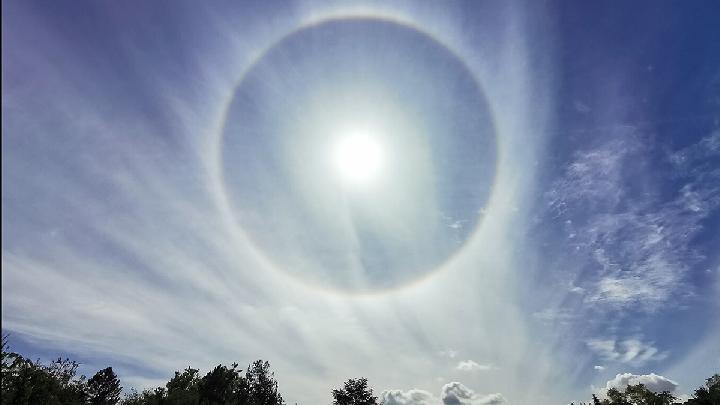
An ISS astronaut captured a rare lunar halo above the Indian Ocean, showing a thin glowing arc above Earth's blue edge.
The Longest Solar Eclipse in 100 Years: When and Where to See It
57 hari lalu

On August 2, 2027, the longest solar eclipse in a century will darken skies across three continents. Here's when and where to see it.
Full Moon in December 2025: When to See Cold Supermoon in the U.S.
2 Desember 2025
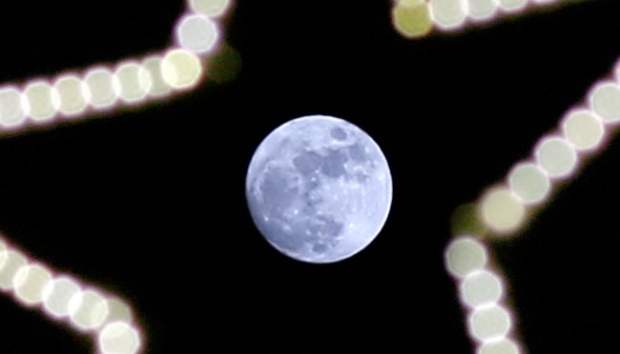
The full moon in December 2025, known as the Cold Moon, will rise on Dec. 4, marking the year's final supermoon and offering a spectacular display.
NASA Continues Preparations for Artemis II Mission to the Moon Amid US Federal Gov't Shutdown
3 November 2025

So far, NASA's crucial operation continues, but officials and contractors warn that its impact could soon be significant.
NASA Bans Chinese Nationals Amid Rising "Space Race" Tensions
13 September 2025
The official ban on Chinese nationals' involvement in all space programs by NASA has caused disruptions in ongoing projects and collaborations.