TEMPO.CO, Jakarta - The sudden two-day total blackout across the Northern Sumatra (Sumbagut) region, paralyzing Jambi, West Sumatra, Riau, North Sumatra, and Aceh on Friday night, May 22, 2026, has triggered widespread public distress and heavy financial losses for state electricity firm PLN customers.
PLN President Director Darmawan Prasodjo has apologized for the massive disruption, attributing the power failure to bad weather that knocked out a 275-kilovolt (kV) overhead transmission line between Muara Bungo and Sungai Rumbai in Jambi. However, this explanation contradicts a forecast from the Meteorology, Climatology, and Geophysics Agency (BMKG), which noted that weather conditions in Jambi and its periphery were merely cloudy with light rain.
This anomaly led the Medan Legal Aid Institute (LBH Medan) to conclude that the blackout stemmed not from force majeure weather conditions, but from systemic mismanagement and poor infrastructure oversight that directly penalized the public.
"We suspect that PLN was negligent. Had the electricity management and infrastructure been properly maintained, this blackout would never have occurred," LBH Medan Director Irvan Saputra stated on Tuesday, May 26, 2026.
According to Irvan, electricity is a basic need underpinning households, businesses, places of worship, healthcare, and education. Legally, PLN is mandated to compensate or reimburse affected consumers under Article 4 of Law No. 8/1999 on Consumer Protection, which guarantees consumers the right to comfort, safety, and security when utilizing goods or services.
This consumer safeguard aligns with Article 29, Paragraph (1), Letters A and B of Law No. 30/2009 on Electricity, which stipulates that the public is entitled to reliable, continuous service of good quality.
Furthermore, Articles 6 and 6A of the Ministry of Energy and Mineral Resources Regulation No. 18/2019 outline the service level standards for PT PLN, binding the company to compensate customers when prolonged systemic failures inflict tangible economic losses.
"PLN is legally obligated to provide compensation or reimburse losses to the affected customers," Irvan emphasized.
He noted that 8.3 million out of Sumatra’s 13.1 million customers were left in the dark, with the grid failure hammering MSMEs, destroying household electronics, and stalling local economies. Irvan argued that the blackout violated constitutional law, human rights, consumer protections, national electricity regulations, and principles within the Universal Declaration of Human Rights.
"PLN's failure to maintain system reliability stands in stark contrast to how swiftly the public is forced to settle their monthly bills under threat of fines and immediate disconnection; yet, when responding to service complaints, the company is slow or unresponsive," he added.
Deputy Chairperson of the North Sumatra Legislative Council (DPRD), Sutarto, firmly demanded that PLN overhaul its operations to ensure such widespread blackouts do not recur. The Indonesian Democratic Party of Struggle (PDI-P) politician insisted that PLN present a clear mitigation strategy, starting with a transparent investigation and comprehensive audit of the current grid.
"Electricity issues strike at the heart of public livelihood. MSMEs are crippled. Healthcare services are jeopardized, and public security is compromised. We simply cannot allow this to happen again," he said.
Sutarto also urged PLN to provide accurate, real-time updates during outages to help the public plan ahead and prevent panic, while concurrently encouraging citizens to practice energy conservation. "Conservation can start with small habits at home, such as reducing consumption of gas, electricity, and fuel," Sutarto suggested.
Meanwhile, North Sumatra Governor Bobby Nasution stated the prolonged outage has caused various problems in the community.
Bobby delivered these remarks during a meeting with Mundakhir Salman, the General Manager of PLN's Central Sumatra Distribution Unit (UID), at his office on Tuesday afternoon. Their discussion centered on the root cause of the system failure, which was traced back to a breakdown within the extra-high-voltage cable network in Jambi.
"From what happened yesterday and its causes, we have instructed all government agencies to anticipate future failures by utilizing backup generators, though because this occurred so suddenly, not every facility could be covered in time," the governor said.
According to Bobby, lengthy blackouts have become an almost annual affliction in Sumatra and require rigorous evaluation, especially as the government actively pushes for nationwide electrification across multiple sectors.
"The government wants everything powered by electricity, from stoves and cars to public transportation such as buses. That's why we need their support. There should no longer be an annual occurrence of blackouts that last a long time and widely affect the area," he added.
Bobby also stressed the critical need for robust backup power systems for vital public services like hospitals, particularly since the Ministry of Energy and Mineral Resources previously declared that the Sumbagut region enjoyed a power surplus. He further emphasized the urgency of reinforcing the electricity supply in the remote Nias Islands by constructing dedicated power plants to meet local demand.
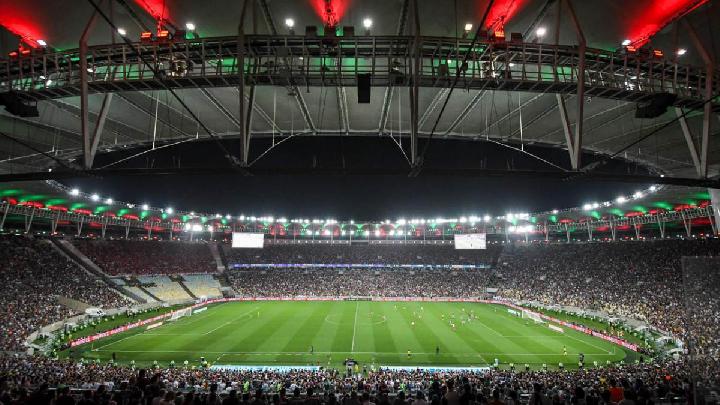
In response to the mounting criticism, PLN UID North Sumatra issued an apology and pledged to fortify its power supply readiness, including securing the upcoming AFF U-19 Cup matches and supporting facilities across the province.
"In terms of affected areas, only Tapanuli Tengah Regency still needs technical adjustments. We will ensure optimal preparation ahead of the AFF Cup," Mundakhir concluded.
Read: Danantara to Evaluate PLN After Widespread Sumatra Blackout
Click here to get the latest news updates from Tempo on Google News