TEMPO.CO, Jakarta - More than three centuries after the renowned French musketeer D'Artagnan's death, an archaeologist has discovered what he believes to be the remains of the legendary figure at a church in the Netherlands. This discovery may help unravel the enigma surrounding the hero's ultimate resting place.
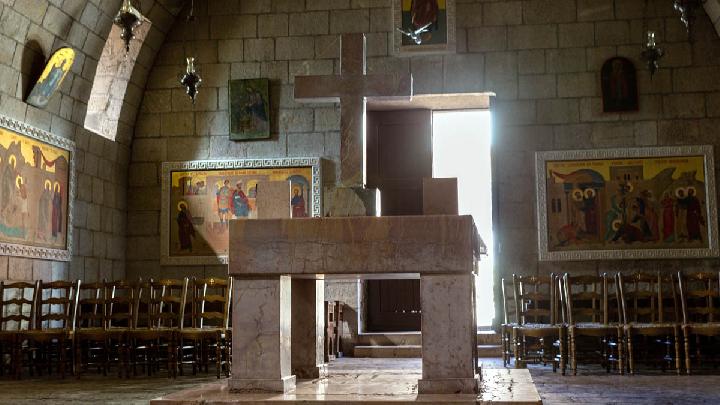
Wim Dijkman, a retired archaeologist from Maastricht who had spent 28 years looking for the musketeer's ultimate resting place, told CNN on Thursday that the skeleton was discovered buried in a tomb in front of the altar at the St. Peter and Paul Church in the southern Dutch town of Maastricht, along with a musket bullet and a little bronze coin struck in 1660.
This tangible proof is consistent with historical accounts that state that D'Artagnan, whose full name was Charles de Batz de Castelmore, was shot in the throat by a musket ball during the French siege of Maastricht in 1673.
As cited by The Guardian, the real-life d'Artagnan served as a musketeer and spy for King Louis XIV until passing away in 1673 during the siege of Maastricht. A collection of bones discovered beneath a fallen church floor may have finally solved the long-standing riddle of where the warrior was buried 353 years later.
“A section of the floor in the church had subsided, and during the repair work, we discovered a skeleton,” Deacon Jos Valke told the local L1 Nieuws broadcaster. “I immediately called Wim because he has been working on d’Artagnan for more than 20 years.”
According to Valke, there were multiple indications that the skeleton belonged to the well-known musketeer.
“He lay buried under the altar in consecrated ground,” he said. “There was a French coin from that time in the grave. And the bullet that killed him was lying at chest level, exactly as described in the history books. The indications are very strong.”
The skeleton is now being housed in an archaeological institute in Deventer after being taken from the church.
A DNA sample collected from the skeleton on March 13 is being examined in a laboratory in Munich. It will next be analyzed against DNA samples provided by descendants of d'Artagnan's father to see whether there is a match.
"I'm very confident," said Dijkman as quoted by CNN, who is still waiting for the results of tests to determine DNA matches between the skeleton and two people claiming to be D'Artagnan descendants, as well as a strontium isotope analysis to determine the region in which the person whose remains are found was born.
“I am a scientist. I’m an archaeologist. I want to be as sure as possible about this,” he said.
CNN | THE GUARDIAN
Read: France: Former PM Lionel Jospin Dies Aged 88
Click here to get the latest news updates from Tempo on Google News