January 18, 2026 | 01:14 pm
By Carlos Frederico Pereira da Silva Gama, Shiv Nadar University, Delhi-NCR.
Its neighbours have been largely silent or supportive of the US raid that captured Maduro, but the impact of that raid will be felt far beyond South America.
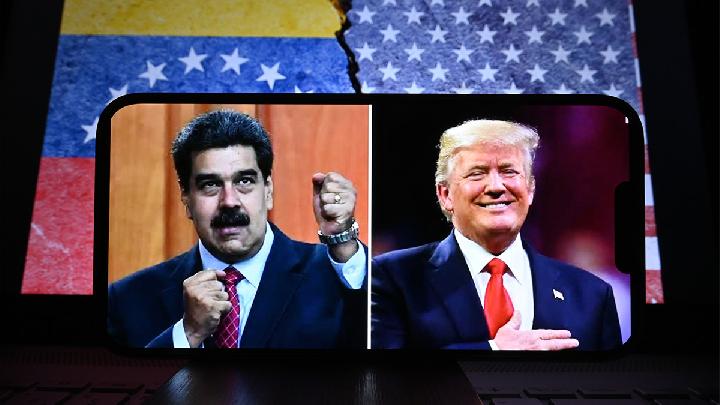
The US capture of Venezuela’s President Nicolás Maduro and his wife, Cilia Flores, from their official residence in Caracas in a military raid has sent shockwaves around the world and drawn widespread condemnation. Normally, such a breach of sovereignty, carried out without authorization from the UN Security Council, would constitute a clear act of war under international law. Yet Venezuela’s South American neighbours have been notably circumspect in their reactions—an ambivalence that exposes deep divisions within the Latin American community.
The region’s largest country, Brazil, has made a few protesting noises, but remained on the sidelines. Argentina has voiced vocal support for the US action, as has Paraguay. Ecuador and Chile have also aligned themselves with Washington. Even Colombia—Venezuela’s immediate neighbour and until recently a political ally—has signalled a tentative rapprochement with President Donald Trump’s United States, despite being led by former leftist guerrilla leader Gustavo Petro.
For Brazil, governed by President Luiz Inácio Lula da Silva and subjected to 50 percent tariffs by the Trump administration, the moment presents a choice between two unpalatable options. Lula’s government did not recognise Maduro’s victory in Venezuela’s 2024 elections, which were widely believed to have been won by opposition candidate Edmundo González Urrutia. Relations between Brasília and Caracas deteriorated after that result was overturned by electoral authorities loyal to the regime. Yet Brazil still sent a delegation to Maduro’s investiture ceremony—an ambivalence echoed after his downfall, when Brasília recognised Vice President Delcy Rodríguez as Venezuela’s “acting president”.
Brazil has nonetheless condemned the invasion in a presidential declaration issued on January 3, followed by similar statements at the Organization of American States, the Community of Latin American and Caribbean States (CELAC), and the United Nations Security Council.
Despite mobilising regional and multilateral forums to demand respect for Venezuelan sovereignty, territorial integrity, and self-determination, Brazil’s response fell short of leadership. Its initiatives amounted to a largely symbolic rejoinder to Trump’s intervention and were weakened by divisions within the region itself. Argentina and Paraguay—both members of MERCOSUR—supported the US action and blocked CELAC from adopting a declaration condemning foreign intervention. Other leaders, including Ecuadorian President Daniel Noboa and Chilean president-elect José Antonio Kast, likewise sided with Washington.
Colombia adopted a more restrained posture. Trump publicly accused President Gustavo Petro—elected on a platform of ending decades of internal conflict involving Venezuelan-linked armed groups—of drug trafficking, echoing allegations levelled against Maduro. Yet Colombia has maintained long-standing security cooperation with the United States in combating narcotics trafficking, dating back to Plan Colombia in 1999. Following Maduro’s capture, a rapid thaw between Petro and Trump ensued, culminating in a White House invitation.
Pink Tide to gunboat diplomacy
The episode underscores the longer arc of Latin America’s political trajectory. After the “Pink Tide” of Left-leaning governments briefly reduced inequalities in the region during the commodity boom, divergent and often authoritarian political models consolidated across several countries. Over the same period, US influence waned. The US was no longer the biggest trading partner or investor for a region economically intertwined with a rising China.
Persistent political fragmentation within Latin America created an opening that Trump has exploited. The operation to capture Maduro followed the release of a new US National Security Strategy acknowledging the limits of American power and advocating a more selective approach to engagement. In Latin America, the document argues, “the affairs of other countries are our concern only if their activities directly threaten our interests”.
The overnight operation reportedly claimed more than 100 lives and capped a sustained US military buildup around Venezuela. That escalation began after the Trump administration accused the Venezuelan government of involvement in drug trafficking. By framing its actions as part of a transnational anti-narcotics campaign, Washington tried to place its operations beyond the scope of international law—and beyond the need for congressional authorisation. After designating Venezuela’s leadership as heads of the so-called Cartel de los Soles and labelling it a foreign terrorist organisation, Trump deployed the largest US naval contingent in Latin America since the Cold War. Strikes on vessels in international waters followed, culminating in a naval blockade and Maduro’s capture.
More global fragmentation ahead
Maduro’s kidnapping from his official residence has been followed by statements from Trump saying the US would run Venezuela for years, and assume control of its oil reserves. The regime’s principal external backers have reacted sharply. Russia defended Venezuela’s sovereignty, while China and Iran condemned the violation of international law.
Trump’s approach marks a departure from post–Cold War US foreign policy and the interventionism of the “war on terror” era. Rather than acting as a confident hegemon, Washington has increasingly relied on legal and normative loopholes to weaken multilateral institutions and limit the influence of emerging Global South powers. In this respect, Trump’s strategy diverges from those of George H. W. Bush, Bill Clinton, George W. Bush, Barack Obama, and Joseph Biden—positioning the United States itself as a disruptive force within the liberal international order established after 1945.
The early consequences of Maduro’s downfall further accentuate global fragmentation. With Venezuelan oil shipments blocked and pursued by US forces, and instability in Iran, major Global South economies such as India and China may increase their reliance on Russian energy supplies in the short term. Trump’s renewed emphasis on “peace through strength”—an approach that has delivered mixed results elsewhere—casts a shadow far beyond the Caribbean. Territorial disputes in Eastern Europe, East Asia and Southeast Asia are increasingly slipping away from multilateral mediation, further eroding the authority of the United Nations.
Trump’s implicit invitation for other great powers to act similarly in their own “backyards” may also carry domestic political costs. The leader who promised to end costly foreign entanglements now appears committed to an open-ended tutelage over a country largely unfamiliar to most Americans. Without ground troops, US commercial and political interests in Venezuela may struggle to gain traction. Venezuela itself risks slipping into civil war between Maduro loyalists and an exiled opposition led by Nobel Peace Prize laureate María Corina Machado. Rather than consolidating US influence, the events in Caracas may draw China and Russia closer together—turning a dramatic and tactically successful intervention into a strategically ambiguous outcome for “Making America Great Again”.
Originally published under Creative Commons by 360info™.
*) DISCLAIMER
Articles published in the “Your Views & Stories” section of en.tempo.co website are personal opinions written by third parties, and cannot be related or attributed to en.tempo.co’s official stance.
US Senate Blocks Bid to Limit Trump's Military Authority in Venezuela
2 hari lalu
The US Senate on Wednesday voted 51-50 to block a bipartisan resolution aimed at limiting Trump's authority to use military force in Venezuela.
Venezuela: Could Machado be the Big Loser in the Power Game?
2 hari lalu
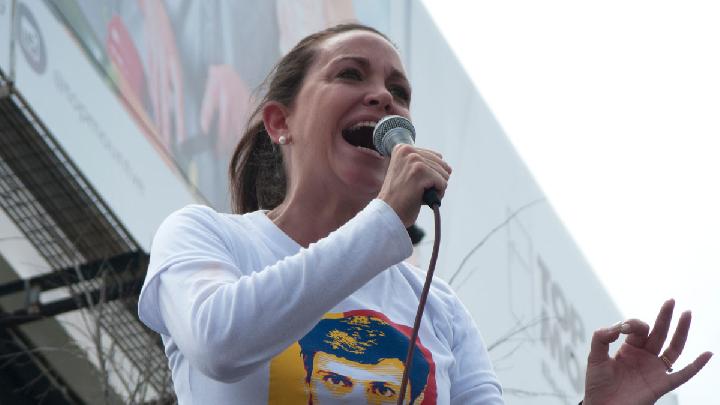
Venezuela opposition leader's plan to give Trump her Nobel Prize may be backfiring.
Why Iran's Fate Means More to Oil Markets than Venezuela's
3 hari lalu
Markets shrugged off Venezuela's oil turmoil but are more anxious about Iran, where unrest or regional escalation could have repercussions.
US Lauds Freeing of American Prisoners in Venezuela
4 hari lalu

The US State Department hailed Venezuela's interim government for releasing American prisoners, calling it a "step in the right direction."
Trump to Meet With Venezuelan Opposition Leader Machado
4 hari lalu
After winning the Nobel Peace Prize Trump coveted and being sidelined from post-Maduro Venezuela, Machado will now meet the U.S. President.
Trump Posts Himself as Venezuela's Acting President on Truth Social
5 hari lalu
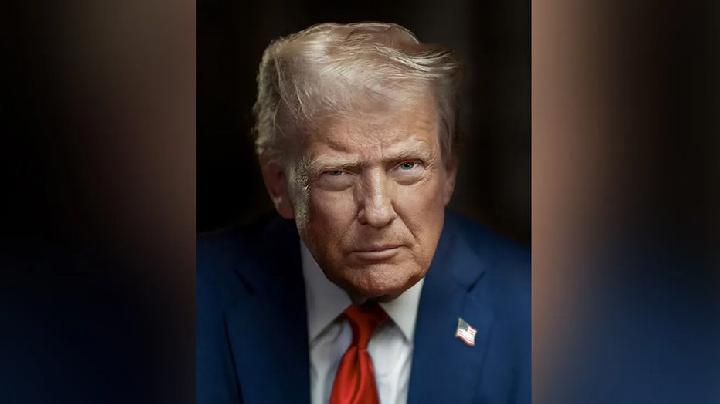
US President Donald Trump posted a Wikipedia-style screenshot declaring himself "Acting President of Venezuela."
Cuba Defiant in Face of "Criminal" US Threats
6 hari lalu
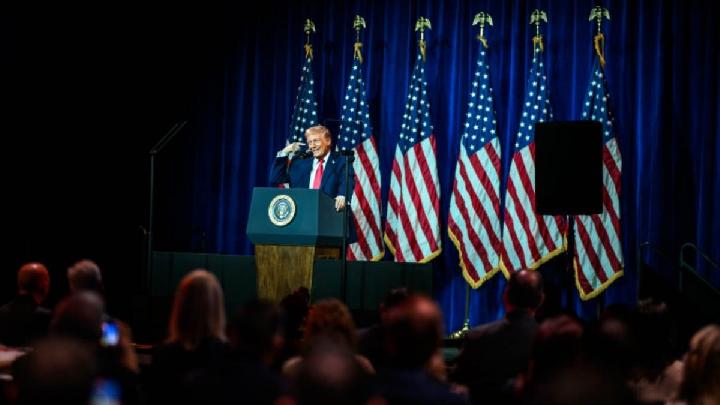
After abducting the leader of Venezuela, the US is now threatening Cuba.
US Attempts to Paint Nicolas Maduro as a Drug Baron
6 hari lalu
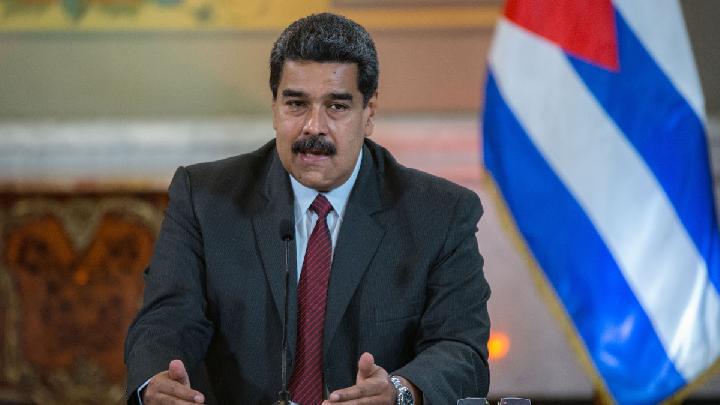
Venezuela's Nicolas Maduro crushed opposition and rigged elections, and now the U.S. accuses him of drug trafficking
World's Gold and Precious Metals Price Outlook for Next Week
6 hari lalu
According to observers, if the world gold price falls, it will likely drop to between US$4,418 and US$4,472 per troy ounce by next Monday.
Venezuela Launches Talks with US to Restore Ties
7 hari lalu
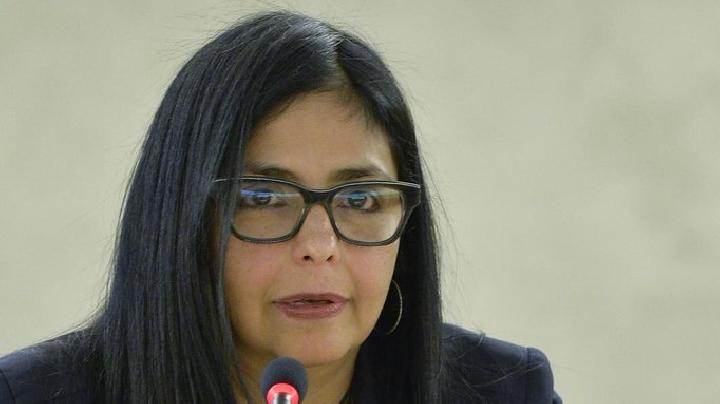
US officials are visiting Venezuela days after US forces captured former President Nicolas Maduro.