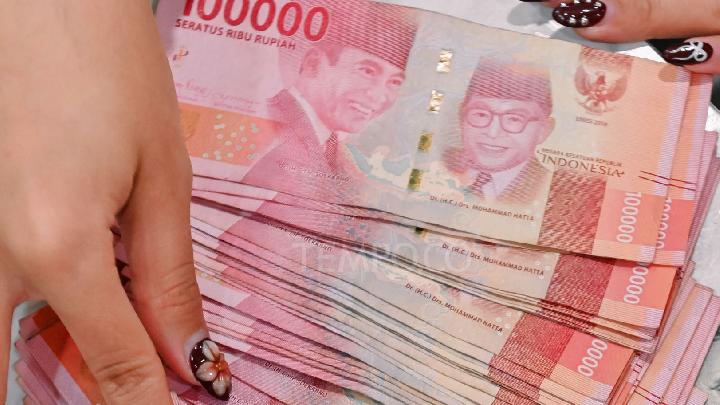
TEMPO.CO, Jakarta - A post claiming the weakening of the rupiah will benefit Indonesia's overseas market is circulating on TikTok [archive], Facebook, and Instagram. The rationale is that a weaker currency will make a country's products cheaper, thereby increasing exports and strengthening the economy.
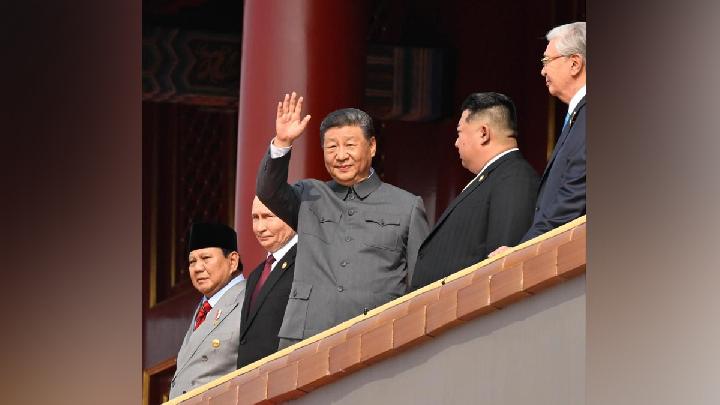
The post claims that Chinese President Xi Jinping is teaching President Prabowo Subianto economic strategy. With a weaker currency than the United States, China could actually become a global economic power.
Is it true that the weakening rupiah actually benefits the Indonesian market abroad because its products sell well?
FACT CHECK
Tempo verified this content by interviewing economic observers and comparing it with credible information. The results showed that the weakening rupiah actually causes domestic prices to soar.
Weakening Rupiah Increases Production Costs and Goods Prices
According to Trading Economic, the US dollar exchange rate reached Rp18,030 on Friday, June 5, 2026. In the past month, the rupiah has weakened 4.46 percent. Over the past 12 months, the rupiah has fallen 10.87 percent.
Andry Satrio Nugroho, an economic researcher from the Institute for Development of Economics and Finance (Indef), stated that the weakening rupiah exchange rate could be advantageous if raw materials for products from Indonesian industries or producers are cheaper.
The problem, Andry explained, is that many raw materials for the Indonesian manufacturing industry still rely on imports, purchased in US dollars. As a result, production costs have increased compared to before.
"The weakening of the rupiah against almost all global currencies is a signal that Indonesia's economic condition is not good enough," said Andry on Saturday, June 6, 2026.
As quoted by Investor.id, the Indonesian Employers' Association (Apindo) explained that around 70 percent of national manufacturing raw materials are still imported. Raw materials contribute around 55 percent to the production cost structure.
Therefore, the weakening rupiah directly increases the cost of importing raw materials, which have long been the backbone of Indonesia's manufacturing industry.
Noval Adib, an economist at Brawijaya University in Malang, said that people will buy daily necessities at higher prices. This is because basic raw materials are still heavily imported. For example, oil and wheat, which are the raw materials for noodles.
"The weakening of the rupiah in Indonesia is not something we expected at all," he told Tempo on Saturday, June 6, 2026.
According to the Central Statistics Agency (BPS), imports of raw materials and auxiliary materials in 2024 reached 216 million tons. Imports consisted of 116,338 thousand tons of industrial raw materials; 72,216 thousand tons of fuel and lubricants; 24,126 thousand tons of food and beverages; and 3,456 thousand tons of spare parts and equipment.
The total import value in 2024 reached US$169,679 million, a significant increase compared to US$161,156 million in 2023.
China's Economy Stronger Than Indonesia's
Noval Adib and Andry Satrio Nugroho stated that Indonesia's industrial conditions cannot be compared to China's, which is quite strong and integrated from upstream to downstream. China is capable of producing its own raw materials, so it benefits greatly from a weakening domestic currency.
The BBC website reports that a weakening yuan makes Chinese exports more competitive, or cheaper to purchase with other currencies. However, a weaker yuan also makes imports more expensive, driving inflation, creating pressure on the economy, and encouraging currency holders to invest in other assets.
For the US, the increasing competitiveness of Chinese goods is a direct attack on the core of Trump's trade war with Beijing. The US government accuses China of profiting from unfair trade through currency depreciation.
Washington also labeled China a currency manipulator during President Donald Trump's first term. However, China denies using a weak yuan to boost exports.
CONCLUSION
Tempo's verification concluded that the claim that the weakening rupiah actually benefits Indonesian markets abroad because Indonesian products are selling well is misleading.
TEMPO FACT CHECK TEAM
**Do you have information or claims that you want to have fact-checked? Contact our ChatBot. You can also send criticism, objections, or feedback for this Fact-Checking article via email to [email protected].